
IPTV for Home Marketers: How to Watch Live Football in Brazil While Running Your Home Business
If you run a home-based business, you already know the drill: your office is your living room, your commute is ten steps to the coffee machine, and your "water cooler chat" is whatever is playing on your second screen. So here's a question most home marketing blogs never ask: why are you still paying a cable bill that locks you into 24 months and gives you 400 channels you never watch?
This is where IPTV comes in — and specifically, an IPTV service built for people who love live sports. Whether you're waiting for a client email to land or taking a 15-minute break between outreach campaigns, having live football streaming in 4K on your desk monitor changes the entire rhythm of your work-from-home day. And if you're part of Brazil's massive football culture, you already know that missing a Flamengo or Palmeiras match is not an option.
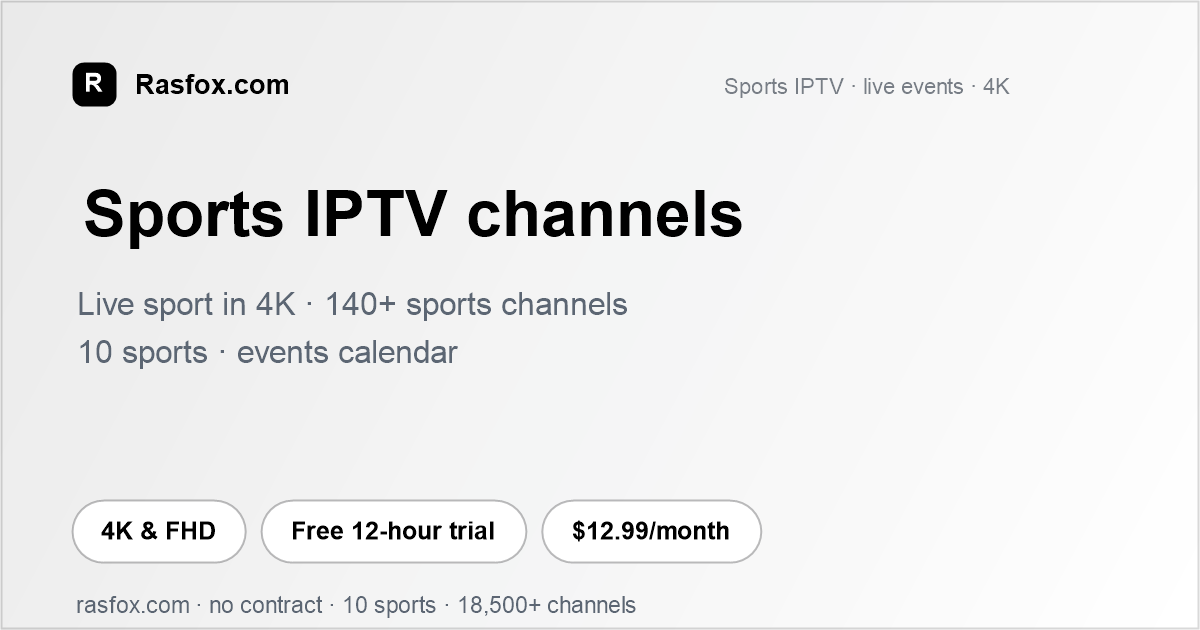
In this guide, we'll connect the dots between the home marketing lifestyle — flexible hours, lean overheads, multiple screens — and IPTV technology. We'll show you how a sports-first IPTV subscription fits naturally into a home office setup, what's available in Brazil, how to set it up in under 10 minutes, and how to stay on the right side of the law while doing it.
What Is IPTV and How Does It Transform Live TV and Football?
IPTV stands for Internet Protocol Television. Instead of receiving channels through a coaxial cable, a satellite dish, or a traditional antenna, IPTV delivers television content over your existing internet connection. The signal travels as data packets — the same way Netflix, YouTube, or a Zoom call reaches your device.
For the average viewer, the practical difference is enormous:
- No installation appointment. No technician, no drilling, no waiting four days for a slot. If your Wi-Fi works, IPTV works.
- Device freedom. Smart TV, Fire Stick, Android box, smartphone, tablet, laptop — IPTV runs on all of them.
- Massive channel counts. A quality provider offers thousands of live channels plus tens of thousands of on-demand titles.
- No long-term contracts. Most modern IPTV services are month-to-month. Cancel whenever you want.
- Full HD, 4K, and 50FPS playback. Modern sports streams run at frame rates that make fast-moving football look smooth instead of blurry.
For football fans specifically, IPTV solves a very old problem. Traditional broadcasters split rights across multiple packages, which is why you needed three different subscriptions to watch the Brasileirão, the Libertadores, and the Champions League. A good IPTV service consolidates all of it into a single interface with a single price.
How Does It Actually Work Behind the Scenes?
Your provider maintains servers that capture and re-encode broadcast feeds. When you select a channel, your device sends a request to that server, and the stream is delivered to your screen in real time. The quality you experience depends on two things: the stability of your internet connection and the quality of the provider's infrastructure.
That second point is where most cheap IPTV services fail. Buffering, frozen frames during a penalty kick, and channels that disappear mid-match are all symptoms of overloaded servers. It's the single most important factor to check before you commit — which is exactly why a free IPTV trial before paying is non-negotiable.
The Home Office Advantage: How IPTV Supercharges Your Home Marketing Routine
Here's the thematic bridge that makes IPTV genuinely useful for home marketers — not just a novelty. When your office is also your home, your entertainment and your work are competing for the same space, the same screens, and the same attention span.
Cable TV is a poor fit for that reality. It demands a fixed installation point, a fixed billing cycle, and a fixed bundle of channels you didn't choose. IPTV is the opposite: modular, portable, and screen-agnostic.
1. Second-Screen Productivity Without the Guilt
Plenty of home-based marketers keep a live stream running in the corner of a second monitor. Background football works the same way background music does: it keeps the energy in the room up without demanding your full focus. The key is having the flexibility to pause instantly when a client calls — something a live cable broadcast can't offer, but an IPTV app can.
2. Cut a Business Expense, Not Just a Personal One
If you deduct home office expenses, every recurring bill matters. Cable packages in Brazil routinely cost more than a premium IPTV subscription, and they usually force you to buy hundreds of channels you'll never open. Switching to IPTV means your entertainment line item drops while your channel count goes up. For a lean solo operation, that's a direct margin improvement.
3. Zero-Friction Client Demos and Co-Working Sessions
If you ever host a virtual co-working session, run a livestream, or produce content for social media, an IPTV setup gives you reliable access to live footage and event coverage without piracy-adjacent screen-scraping tools. Content creators who cover sports marketing, sponsorship deals, or fan engagement need fast access to live matches — and IPTV delivers it in a browser tab.
4. It Travels With You
Digital nomads and travelling marketers know the pain of arriving in a new city and losing access to their home channels. IPTV is location-independent. Log in from a hotel in São Paulo, a co-working space in Lisbon, or your in-laws' house in Minas Gerais, and your channel list is exactly where you left it.
That portability is the reason services like RasFox IPTV have grown so quickly among remote workers and freelancers who can't commit to a fixed address for two years.
Inside Brazil's IPTV Landscape: Football, Fans and Fast Internet
Brazil is arguably one of the best markets on earth for IPTV — and not just because of the football obsession. The country has broad fibre coverage in urban areas, aggressive competition among internet providers pushing speeds above 300 Mbps, and a population that overwhelmingly consumes video on mobile devices.
At the same time, traditional pay-TV in Brazil has been losing subscribers for years. The reason is simple economics: Brazilians want football, and football rights are fragmented across too many packages. A fan who wants the full picture often needs Globo, SporTV, Premiere, ESPN Brasil, BandSports, Combate, and TNT Sports BR — four or five separate bills to watch one sport.
That fragmentation is the exact gap IPTV was built to fill. A sports-first IPTV service bundles those channels into a single subscription with a single login.
The Sports-First Philosophy Behind RasFox
Here's where RasFox.com separates itself from generic IPTV resellers. The platform traces its roots to Radio Malena 89.1 FM in Buenos Aires, Venezuela 370 — a station with deep ties to tango, Argentine culture, and, above all, live sport. That heritage shaped everything: RasFox was designed with a total focus on sports channels and live sports events, not as an afterthought bolted onto a movie library.
For Brazilian and Latino viewers, that focus translates into a channel lineup that actually matters:
- Brazil: Globo, SporTV, Premiere, ESPN Brasil, BandSports, Combate, TNT Sports BR
- Portugal: Sport TV 1–6, Eleven Sports, Benfica TV, Porto Canal, DAZN Portugal, Eurosport
- Argentina & Latin America: TyC Sports, ESPN Premium, TNT Sports Argentina, Fox Sports, DirecTV Sports
- Africa: SuperSport, Sport TV Africa, ESPN Africa
- Worldwide: ESPN, DAZN, Fox Sports, beIN Sports, Sky Sports, Eurosport
And the competitions covered are the ones you actually care about: Brasileirão, Libertadores, Champions League, Liga Portugal, Liga Argentina, La Liga, Premier League, Formula 1, UFC, and much more.
The Technical Numbers That Matter
- 12,000+ live channels across sports, news, entertainment, and kids' programming
- 40,000+ on-demand titles (VOD) in 4K at 50FPS for smooth, sharp motion
- 2 simultaneous screens — one for your work monitor, one for the living room
- No buffering thanks to load-balanced servers built for peak match-day traffic
- No contract — month-to-month, cancel anytime
- 24-hour free trial so you can test it during a real live match
- Portuguese and Spanish support for lusophone and Latino customers worldwide
If you've ever had a stream freeze exactly as a striker runs at goal, you understand why the "no buffering" claim is the one worth testing hardest. Do it during a Brasileirão Sunday fixture — that's the real stress test.
Hardware and Setup Guide for Home-Based Marketers
One of the best things about IPTV is how little hardware it demands. You almost certainly already own everything you need.
What You Need
- A stable internet connection: 15–25 Mbps per simultaneous stream is comfortable for Full HD; 30+ Mbps for 4K.
- A device: Smart TV (Samsung, LG, Android TV), Amazon Fire TV Stick, Android TV box, Chromecast, Apple TV, smartphone, tablet, or PC/Mac.
- An IPTV player app: Most providers supply their own app or recommend a compatible player.
- Your subscription credentials: Usually a username, password, and server URL, or an M3U playlist link.
Setup in Four Steps
- Install the app on your chosen device from the official app store.
- Log in with the credentials from your provider — this usually takes under two minutes.
- Let the channel list load. With 12,000+ channels, the first sync can take a few moments.
- Run a speed test and start with an HD channel before jumping to 4K, so you can confirm your connection is stable.
Pro Tips From the Home Office
- Wire the main screen. Ethernet beats Wi-Fi for your primary viewing device, especially during peak evening hours.
- Use 5 GHz Wi-Fi for secondary devices to avoid congestion on the 2.4 GHz band.
- Prioritise traffic in your router settings for the IPTV device if you're also running video calls.
- Favourite your sports channels on day one, so match day is one click instead of a scroll.
Before you buy hardware or commit to a subscription, always test first. A 24-hour IPTV free trial lets you validate your internet speed, your device compatibility, and the server stability during actual live events — which is far more useful than any spec sheet.
Legal vs Illegal IPTV: How to Stay Safe and Compliant
This is the section most IPTV articles skip, and it's the one that matters most if you're running a legitimate home business. You do not want an entertainment choice creating legal or financial risk for your operation.
Here's the honest breakdown:
Legal IPTV
- Providers that hold proper distribution rights or operate with licensed content agreements.
- Transparent terms of service, clear billing, and traceable business entities.
- Data protection practices that don't expose your personal information.
- Payments through standard, auditable channels.
Illegal IPTV
- Services that redistribute premium sports content without rights — this is piracy, plain and simple.
- Prices that look "too good to be true" and are typically exactly that.
- No refund policy, no support, and a habit of vanishing mid-subscription.
- Increasingly the target of enforcement action by regulators such as Anatel in Brazil, which has run repeated operations against unauthorised TV boxes and pirated streams.
Six Rules for Safe IPTV Use in Brazil
- Choose a provider with a real reputation and a public presence, not a random reseller in a Telegram group.
- Never pay for a full year upfront with a service you haven't tested. Start monthly.
- Always use the free trial and check stability during live sports, not at 3 a.m.
- Avoid "lifetime" deals. No legitimate infrastructure is funded by a one-time payment.
- Keep your personal data minimal. Don't hand over documents or sensitive details to unverified sellers.
- Stick to mainstream payment methods that offer some form of buyer protection.
A platform like RasFox, the best IPTV service for live sports, operates with visible contact channels, Portuguese and Spanish support, transparent monthly pricing, and a documented free trial — the signals you should look for in any provider before handing over money.
Frequently Asked Questions About IPTV for Home Marketers in Brazil
Is IPTV legal in Brazil?
IPTV technology itself is completely legal. What matters is whether the provider has the rights to distribute the content it offers. Legal IPTV services operate with licensing agreements; illegal ones redistribute premium content without authorisation and are subject to enforcement by Anatel and rights holders.
How much internet speed do I need for IPTV in 4K?
For a single 4K stream at 50FPS, plan for around 25–35 Mbps of stable throughput. For Full HD, 10–15 Mbps per stream is usually enough. If two people will stream at the same time, add those figures together and leave headroom for your work video calls.
Can I watch the Brasileirão and the Champions League with RasFox IPTV?
Yes. RasFox's sports-first lineup includes Brazilian football coverage through Globo, SporTV, Premiere, ESPN Brasil, and TNT Sports BR, plus the Libertadores, the Champions League, La Liga, the Premier League, Formula 1, and UFC on its international sports channels.
How many devices can I use at the same time?
The standard RasFox IPTV plan supports two simultaneous screens. That's ideal for home-based marketers who want one stream running on the work monitor and another in the living room for family viewing.
Do I need a contract or special equipment?
No contract and no special hardware. If you own a Smart TV, a Fire Stick, an Android box, or even just a laptop, you already have what you need. Setup typically takes under 10 minutes, and you can test the full service with a 24-hour free trial before subscribing.
Is there support in Portuguese or Spanish?
Yes. RasFox provides customer support in both Portuguese and Spanish, which matters if you're a Brazilian viewer or part of the wider Latino and lusophone diaspora.
Final Take: A Smarter Entertainment Line Item for a Smarter Home Office
Running a home-based marketing business is all about removing friction — fewer tools that don't talk to each other, fewer subscriptions that don't earn their place, fewer fixed costs that don't flex with your income. Cable TV is one of the last genuinely inflexible line items in a modern home office, and IPTV is the cleanest way to replace it.
Combine that with the fact that a sports-first provider like RasFox brings you 12,000+ channels, 40,000+ VOD titles in 4K 50FPS, two simultaneous screens, no buffering on match day, no contract, and Portuguese and Spanish support — and the value proposition stops being about entertainment and starts being about infrastructure.
Here's the practical next step: don't take anyone's word for it, including ours. Start a 24-hour IPTV free trial, install it on the device you already own, and test it during a live Brasileirão or Libertadores fixture. If the stream holds up when it matters most, you've found your new setup. If it doesn't, you've lost nothing but an evening.
Work smart. Watch live. Cancel the cable.
